

Category: Legal Branding

Legal Branding

6 Tips To Simplify And Streamline Employee Scheduling

Creating employee schedules and ensuring that your workforce sticks to them is one of the critical business functions. However, this is easier said than done because a lot of effort is needed to allocate tasks to teams and manage shifts optimally. At the same time, it is something that you cannot survive without. Proper schedules determine the overall productivity of the employees, minimize the wastage of hours and optimize business operations.

But do you really know what goes into simplifying employee scheduling? Is it possible to prevent understaffing or overstaffing and ensure that there is no wastage of work hours? The answer lies in streamlining employee scheduling and software tools make the best bet for busy entrepreneurs. Also, here are some tips that can help you to create effective robust and time-saving schedules.

Tip #1: Know your business first

Even before you start creating an employee schedule for your business, you must understand its requirements. A good schedule goes much beyond putting the resources on the right tasks. Rather, it is making sure that the right resource is at the right place and at the right time. Investing in a software solution that provides a 360-degree view of your business is a great idea. Essentially, it should empower you to decide when you need to schedule more employees and when you can manage with less.

Tip #2: Review the existing resources

Once you are clear about your requirements and goals, you need to get a comprehensive review of the existing resources. Check the availability, suitability and exemption status of the staff members for each shift. Availability means whether an employee can be at a job location at a specific place and time. Suitability refers to the skills they must have to fit the role. Exemption status indicates if you need to pay the employee for overtime.

Tip #3: Enable seamless communication

Communication keeps an organization running like well-oiled machinery, which makes it mandatory for the success of the business. Having a smart scheduling software solution is a good idea because it can handle this requirement well enough and serve as a powerful communication tool. For example, Deputy offers powerful scheduling tools that can be used to publish and share workforce schedules easily. They also enable you to send across notifications related to shift changes to the employees and managers with the help of SMS, emails and push notifications.

Tip #4: Provide flexibility for the employees

Another useful tip to simplify and streamline employee scheduling is by providing your employees a good degree of flexibility. Look for a solution that gives them the freedom of choosing the shifts when possible. Though you cannot give them the choice every time having control over their schedules motivates the employees and enhances their performance to a considerable extent. A software solution, like a scheduling app, that enables them to switch shifts subject to availability makes a good choice for businesses in this context.

Tip #5: Consider employee preferences

Providing flexibility regarding shift changes is vital for keeping your employees happy and motivated. But that is not where you should stop when it comes to effective and employee-friendly scheduling. Rather, you should take a proactive approach and consider individual preferences while preparing the schedules. Keep track of the kind of tasks that individual employees want to do and the shifts that work for them. Unless there is shortage of resources, try to allocate them work and shifts on the basis of these preferences. This ensures a positive culture and high levels of motivation and productivity within your organization.

Tip #6: Reward good attendance

Make rewards a part and parcel of your employee scheduling process. The system can go a long way in encouraging the employees to be regular with their shifts and always show up on time. At the same time, the reward practice drives workforce satisfaction and discourages no-shows and indiscipline within the organization. You need not spend a fortune on rewarding your best employees, even small but meaningful perks can be enough to make the scheduling practice effective and successful in the long run.

These tips can go a long way in simplifying and streamlining the employee scheduling process for any business. In addition to enforcing them as a part of your business operations, you should invest in a software solution that has the right set of features to automate the entire workforce scheduling process. If you don’t already have one for your business, the best time to get it is right now. Just be sure about choosing the right one because it will be a long-term asset rather than a short-term expense.


Legal BrandingLocal BrandingPersonal Branding

3 Most Important Tips for Positioning a New Brand in a Fast-changing Market

Modern business world is full of buzzwords we’ve all heard, though we may not always know exactly what they mean. “Positioning” is definitely one of those that people often use, without actually knowing its right meaning or what it entails. Basically, it refers to trying to find a place for your brand in the minds of your customers, who would hopefully choose products offered by the same brand they’ve learned to love and trust. While positioning takes place, it’s one of those things you should start working on as soon as you set up a company. To help you understand what that means, we’ve prepared the following tips, which should help you do it properly.

Know the competition and market

Each company has its strengths and weaknesses and your task is to find those that belong to your competitors. Once you identify them, you can move to analyze their strategies, objectives and target groups and identifying the niche which you could dominate. Equally important is to know your target audience and market, so that you could create valuable content that would not be just advertising your brand, but also providing value and engagement. The more engaged people are, the more likely they are to opt for the brand whose messages they respond to. When addressing your audience, make sure you insist on your unique selling point(s), so that you can distinguish your company from the rest. Finally, don’t expect everyone to love your company, but focus on your target audience. They will be your most loyal and faithful customers and it’s vital you position your brand among them as the one that provides the most for the money they’re ready to spend.

Focus on USP

No-one will opt for a product that offers the same as a similar, already well-established competitor’s product. Customers have to believe they are buying not only the product but some other unique feature as well when choosing your product over a competitor’s. That’s why you need to focus on all useful attributes of your brand, especially if other companies lack them. It could be your more favorable price, outstanding client care or coverage. Companies operating in Australia, for example, understand that locals react to specific strategies, which is why they turn to experts in the field and hire a brand design agency from Sydney, which can help them position their brand in the best possible way locally. Remember that what works well in one market doesn’t have to be the best option elsewhere, which is why it’s important to pinpoint the particular demands of local markets.

Nothing is carved in stone

What you really need to understand is that no strategy is unchangeable. As a matter of fact, you have to constantly revise and adapt your strategy, since the conditions in which you operate are changing. That means that even if you’ve opted for the right approach from the beginning and you see that you’re getting the results you were hoping for, there is no time for rest. Your strategy needs to be tested constantly and continuously. This includes harvesting data from surveys, groups, and interviews and processing them in a way that you receive some valuable information, which will be the cornerstone of your adapted strategy. What this will help you achieve is position your brand as a forward-thinking one, which is always ready to meet the demands of the market, rather than one which takes its time to respond to the ever-changing shifts in consumers’ preferences and priorities.

If you position your brand correctly, i.e. apply the right positioning strategy in the right way, your brand recognition and awareness will be truly well established. Your particular strategy will depend on the circumstances in which you operate and your niche. However, it’s vital that you constantly monitor the situation and adapt your strategy to maximize the results. These three tips will surely help you with that.

Legal Branding

Key Ways You Can Show Your Clients You Appreciate Them

Many entrepreneurs focus on how to continually get more clients, and how to make the ones they have to spend more and buy more often. While this is an important part of business, it’s also wise to show your customers that they mean more to you than simply some better numbers on a spreadsheet or more cash in the bank.

If you want people and/or organizations to continue to spend money with your business, as well as to recommend your venture to others, it’s a good idea to show how much you appreciate your clientele. This doesn’t have to cost you a ton, either. There are plenty of ways to show customers you value their business without draining your bank account.

Get to Know Customers and Provide Thoughtful Touches

To make people feel special and appreciated, you need to know who they are and what’s important to them. Pay attention when your clients talk about their families, passions, hobbies, upcoming events, etc. Then, make an effort to show people you’re thinking of them by sending a note or gift or by making a phone call on special occasions. Get in touch on people’s birthdays or when they get married, have a child who graduates, or has some other key event happening. 

Celebrate the successes of your clients, too. For instance, if you learn that a corporate customer has won an award or opened a new location, congratulate them, send a small gift, and show you notice them and the wins they’re having. 

Also, send people quality business thank you cards at the end of the year to thank them for their patronage. Acknowledging that you couldn’t move your business forward without your customers makes people feel valued. You may want to add a gift to this Christmas expression of gratitude, too. Choose something relating to what your clients do in their spare time, such as a meal voucher at a happening restaurant for a foodie or tickets to a basketball game for a sports lover. 

Another thoughtful touch is to remember the preferences of clients. For instance, make a note of what kind of coffee or tea people like and have it on hand when you meet with them or examine which types of products customers buy and let them know when you have something similar available.

Add Value

Another way to show clients you appreciate them is to add value to them. For example, if there’s an extra job you can do for someone that won’t take you long because of your experience, but that will save your client a whole lot of time, make the extra effort. 

You can also introduce customers to other business contacts who might provide the additional services they require or who can otherwise help them achieve their goals. Plus, look for ways to help educate your customers, such as by sending out helpful updates or information about industry trends, new technologies or tools, upcoming events, or keyways clients might be able to save time or money. 

Give People as Much Personal Attention as Possible

As a busy entrepreneur, your time is limited. However, to show your clients you appreciate them, do what you can to give them personal attention on a regular basis. This is particularly essential for your top clients who spend the most money with you each year and who have been the most loyal. 

Make people feel safe knowing that they can reach you for information, advice, or other support when they really need it, rather than always being transferred to someone who is lower in rank and perhaps not as familiar with their purchase history, business setup, or needs. 

Be a Good Communicator

Similarly, be a good communicator. Your clients won’t feel appreciated or happy if you take forever to respond to their questions or requests, hurry them off the phone or out the door, or say you’ll ring them back but don’t. It’s not nice for people to feel that they’re less important than other things on your list. They don’t want to have to chase you to get assistance, either. 

Also, make an effort to get in touch with clients on a regular basis. Send an email or pick up the phone every few months to see how they are and if they need to buy more stock, hire your services again, or another type of assistance. 

When you’re chatting with customers, remember that communication is a two-way street. Don’t just talk; also listen. Notice people’s body language and display active listening, repeating things back to people to be sure you truly understand what point they’re making or the information they need. This reduces the likelihood of miscommunication and makes people feel properly heard and appreciated.

To make your customers feel special, you’ll need to invest some time, energy, and possibly funds. However, doing this will reward you in spades in both the short and long term.

Legal BrandingPersonal Branding

Why Branding Doesn’t Cost as Much as You Think

Branding is one of the most essential components of a successful advertising strategy. While it’s vital to get the word out about the goods and services your business offers, it’s all for nothing if you can’t communicate why customers should work with you. You need to emphasize the special qualities that make your business stand out in a crowded market.

Good branding doesn’t have to be fancy. Like all the essential components of a quality marketing strategy, a little branding goes a long way. There are ways to establish your brand identity even when you don’t have a big budget.

Here are seven ways you can create an effective branding strategy for your company while spending much less than you’d expect.

1. Build Your Identity

Your branding should communicate the core elements of your business’s identity, as well as what services you provide and what industry you work in. You don’t have to hew to industry trends, but your branding should give customers an idea of what your company does with just a glance.

You can start with in-house graphic design if you’re not ready to outsource. Free design and branding tools like Canva or Looka can help you develop logos, graphics and promotional material for your company.

When your business expands and you want to invest more in branding, you’ll also have a good starting point for the designers you work with. Even if not professional, your homemade branding will show others what you consider to be your business’s values and major appeal.

2. Know Your Audience

Market research can take many forms, but it has to get done somehow. Surveys and test ad campaigns are some good ways to gather information.

Once you have a healthy amount of data or a good feeling about your lay of the land, you can start building customer or audience personas. Personas — archetypes of the people you want to sell to — will help you structure your branding strategy by clearly outlining what you think your audience is after. 

One example of a persona you might use could be a DIY enthusiast who is after supplies and information. They want knowledge that is reliable, straight-to-the-point and a little rough around the edges. You can then use this simplified version of your audience to inform your branding.

3. Establish Your USP

Your unique selling proposition (USP) is what makes you different from the competition. Identify your USP, then use it to guide your brand voice and demonstrate why customers should choose your company.

“High-quality” and “customer-focused” are phrases that every business wants to use to describe itself. You’ll need to be more specific, and really dig into why your company does what it does.

How many years have you provided top-tier customer service? What kinds of projects have you worked on? How have you overcome challenges? Do you offer something with unique features that no other business can compete with?

Eventually, you may loop back around to describing your business as customer-focused and one that delivers high-quality products. It’s not the best place to start, though. People have heard it before, and they want something a little more substantial.

4. Care About the Consumer

Value your customer’s time. Bad business writing costs smaller companies an average of $420,000 every year. That’s because when you ask customers to slog through marketing-speak without speaking directly to them, they tune out. 

There are many different tips and tricks you can use to grab a potential customer’s attention in both branding and writing. However, one of the most effective philosophies to have — which will help make your overall strategy more successful, no matter what you do — is to care about the customer. Treat their time as more valuable than your own. Good branding earns every second it spends in front of a customer’s eyes. 

This can be intimidating, but it doesn’t have to be. Start with your research, put yourself in your customer’s position and build on your USPs.

5. Be Part of Your Community

You can create better branding by making your business a part of your community. Better local contacts will help you stay on top of the latest developments and also build a network that will help you know what people need. You’ll also be building relationships with local personalities or industry influencers that you can leverage or build into powerful marketing partnerships.

6. Go Big on Visuals

When designing any part of your branding or marketing strategy, you have an opportunity to use visual design to underline and strengthen your message.

Follow the basic visual design principles that professional graphic designers use. These guidelines will help you reduce clutter, strengthen your message and be clearer in your branding. All this will help your marketing do a better job of communicating what your business offers to customers.

7. Remain Consistent

Especially at first, keep your branding consistent. Repetition is how customers become aware of your company. If you are cycling between logos and branding you don’t have faith in, it’s less likely for you to become familiar and recognizable. You should avoid iterating on your strategy too often. Slowing down will help your message stick in customers’ heads and also give yourself a chance to collect data on what works — or doesn’t — in your current branding strategy.

This also means establishing a consistent web presence, like a blog or set of social media accounts. It will communicate to customers your company’s core mission and beliefs, as well as what your business can do for them. Blogs, interestingly enough, are one of the most trusted forms of information on the internet. A professional-looking blog with some informative, relevant content can help you explain how your business stands out from the competition.

There are other practical reasons for being consistent in your online presence. If you haven’t posted in several months, it can leave potential customers with a bad impression of your brand — or worse, lead them to believe you’re no longer in business.

Why Branding Doesn’t Have to Be Expensive

Branding is one of the most important parts of any marketing strategy — and it’s worth the investment. However, good branding doesn’t have to be expensive. A solid plan does not require glossy graphics and fancy web design to work. Instead, good branding is about knowing your audience and communicating with them in a way they’re receptive to.

Any company can benefit from basic design and branding principles. While bringing in a professional agency can be a good idea in the long term, smaller businesses with less to spare for marketing don’t need to wait — branding doesn’t always need a big budget.

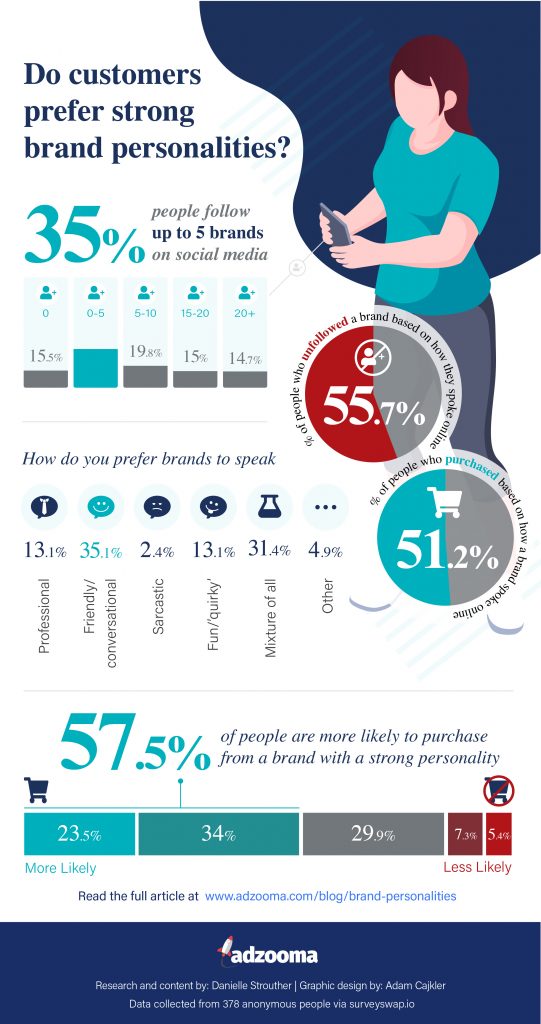
For the end, here is the research about brands with strong personalities and how it influences their purchasing decisions.

Source: Adzooma

About the author

Lexie is a branding enthusiast and web designer. She loves checking out local flea markets and taking her Goldendoodle on hikes. Follow her on Twitter @lexieludesigner and check out her design blog, Design Roast.

Legal Branding

A Business Database Is the Key to Better Business Performance

There was a time when data was as an ancillary to business and was in no way related to the core business goals. People used to gather data with the purpose of performing other business tasks with ease. Sales data was mainly for accounting purposes, and manufacturing data helped to ascertain quality and output. Data used to have only one dimension and meaning, and it did not add any value to the business.  

With time, all that has changed drastically and data has now acquired multiple dimensions. Data has transformed into one of the most valuable resources for business. By its ability to add value to the firm, data is now as relevant to business as any other asset. Every aspect of the company from supply chain operation to manufacturing, marketing, and customer relations are now heavily dependent on databases that capture all business activities and point towards business performance.

Need for managing data

Databases are storehouses of data and preserve and process data generated from various business processes. Data is made from all activities of business at all levels and by using suitable technology the data is driven to the database first and then extracted, manipulated and analyzed according to the firm needs. Proper analysis of data provides valuable insights for business. Hence, the demand for DBA consultants is growing. They are responsible for managing databases of all types and help businesses to organize data for meaningful consumption.

The value-adding aspect

The real value of data lies in the manner of using it. The capability of the DBA consultant helps to unearth the hidden value of data and pass it on to the business process. The consultant must have good knowledge about the business process so that he or she can understand the relevance of data in the proper context of business and present it to the user in the most appropriate manner. Since all business aims to satisfy customers, data analysis reveals consumer behavior that provides direction to the business. Any changes in consumer behavior are captured through data collected from the field and business owners can decide on what actions must be taken to adapt to change for business gains.

Database management services

Database management is a highly technical job, and as it does not relate to the core business functions, business owners rely on outsourcing the service. There are many professional service providers offering database administration services across all platforms. Different technologies provide the framework for databases that suit business, but they all have a common goal of creating a robust data system. By outsourcing the service, you have the peace of mind that the database is in safe hands and you can make proper use of data for making the right business decisions. 

Depending on the scale of operations and the demands of business, you can opt for remote DBA services that provide comprehensive database management services 24×7. Such provider might also offer data entry services when required, and with your data entry outsourced you would be able to focus more at your core competencies to increase your business efficiency. 

Finally, the services empower entrepreneurs with the expertise of managing data efficiently so that the powers of data enhance the business prospects.

Centralized systems

On the off chance that your business is developing and you have the staff to enable you to run it, monitoring the expanding measure of information can be precarious. Great database frameworks can enable you to deal with all your business-basic information midway, securely and safely – at whatever point you need it – to help your odds of accomplishment.

Managing customer data and relationships

In the event that clients are the soul of your business, at that point, a decent customer relationship management (CRM) database ought to be at the core of your development plans. Full-highlighted CRM databases are normally amazing enough to store and process everything, from client contact subtleties, collaboration history, and records, to new prospects, leads and business openings. Some CRM frameworks can even enable you to run and track promoting efforts, for example, email bulletins. See more on client relationships with the board.

Efficient inventory tracking

Dealing with your stock well can at times feel like an exercise in careful control. It’s anything but difficult to have excessively – sitting on a rack gambling wastage, or excessively little – frustrating your clients and harming your notoriety. In case you’re following your stock physically, it’s additionally simple to miscalculate, make information section blunders or lose spreadsheets and notes. By utilizing a stock following database, particularly close by electronic information trade and standardized identification checking, you can maintain a strategic distance from those dangers and limit lost deals while expanding your chances for development.

Planning for growth

Most business databases have some type of announcing capacities – from examining input information and profitability following to envisioning future patterns and clients’ needs. In case you’re arranging a technique for development, a hearty database framework can be your business’ most significant asset.

Improved customer visibility

So as to give your customers the degree of individual consideration that they ache for, you should have the option to rapidly access accounts, contacts, errands, occasions, and any important individual information. Salesforce gives an advantageous stage in dealing with the majority of your client-related data, making it feasible for you to regard each client just as the person in question was your solitary client. Furthermore, by better understanding your clients, you’ll be in a situation to more readily conjecture their future activities ‘ Salesforce CRM improves figure precision by as much as 42%.

Better Support

A device is just on a par with it useful. Salesforce gives unrivaled help, so on the occasion that issues emerge, steps are promptly taken to guarantee that everything gets too rapidly back to full usefulness. Maybe the best part is that with the whole stage situated in the cloud, support should be possible without carrying specialists into the workplace, and without paying costly upkeep costs.

Expanded effectiveness and efficiency

Between computerizing tedious errands, rousing better cooperation, and dispensing with the requirement for administrative micromanagement, Salesforce trims away at inefficient procedures and repetitive exertion, leaving a hyper-proficient framework that will give your association and your client’s genuine incentive for each move made. Subsequently, organization efficiency increments. Truth be told, the selection of Salesforce has been appeared to build deals efficiency by as much as 34%.

Legal Branding

How to Utilise Accounting and Marketing to Get the Best Possible Results for Your Business

Accounting and marketing make up some of the key components of every business. However, most of the time, people tend to forget the crucial role they can play and the benefit they can bring if they are utilized in concert with each other. In fact, it’s absolutely imperative to do everything within your power to maximize the cooperation between these two departments as it will give you the ability to grow and develop your business in a healthy and organic way. So, in order to help you out, today we are going to take a look at how to utilize accounting and marketing together to get the best possible results for your business.

The basic connection

First off, it’s important to understand the basics of both of these departments and how they are connected. Namely, the marketing department comes up with sales and awareness strategies with the goal of increasing the overall sales of a business’s product or service and the profit they will receive. On the other hand, the accounting department keeps a constant track of the business’s financial condition and thus directly determines how much money can be spent on marketing.

This whole process has become extremely quick and efficient with the use of modern technologies which means you can instantly use the information you get from accounting in order to maximize your marketing department’s efficiency. While this move towards digitalization is slowly taking place all over the world, places such as Singapore have recently launched plans to help the entire accountancy sector make a more determined move towards digitalization. In fact, there are many tools such as Xero accounting from Singapore that can allow you to have a constant real-time view of your finances and any changes that are occurring which can allow your marketing department to use that information to come up and determine the success of their strategies.

Determining success and measuring results

The best way for a marketing department to know if their campaign is a success is to look at the results which they will receive from nowhere else but the accounting department. This is a crucial part of every marketing campaign, not only because its goal was to have good results in the first place but because the results will show you if you are taking the right approach or if you need to switch things up in order to start seeing the results you want. Having a constant reference point of how a certain strategy is doing will also help when it comes to the realization of that strategy and give you the relevant information to help you guide it towards success.

Creating realistic projections

When coming up with a marketing strategy, the marketing department can often overestimate the results it will have, which could negatively impact the business as a whole. This is where the accounting department steps in to determine just how accurate those projections are based on past experience and concrete data. This process of making projections that are as realistic as possible is crucial when making both current and future financial decisions and won’t only impact these two aspects of your business but your business as a whole as well.

Price assessment

Price assessment is one of the most important aspects of a marketing campaign as it will determine the marketing goals that will be set. Finding the optimal pricing will also ensure your business can make a profit. With that in mind, the only way to correctly assess the prices of your products is to closely work with the accounting department which has all of the relevant information when it comes to the costs of the product and will ultimately give you the most realistic price which will highly impact the marketing departments whole strategy.

Making long term plans

If you are able to utilize both marketing and accounting to work together in your business you won’t only be able to create accurate projections of your future but you will also be able to use that information to create concrete long-term plans for your business. Marketing departments can give accounting departments business forecasts, which assist accounting in allocating resources effectively. Marketing may also provide accounting with information regarding which products or services are best sellers. If all of the information is shared between these two departments, you will be able to use it to decide on which aspects of the business to focus on.

Conclusion

Finally, it’s important to understand that having marketing and accounting work together will ultimately help you form an understanding of the bigger picture behind your business’ success or failure and will deepen the knowledge you have of your own business. That is why accounting and marketing are both integral parts of a business and having them work together will help you run your business more efficiently and successfully.

Legal BrandingLocal Branding

7 Tips for Building a Business Partnership

Forming a great business partnership is not an easy task. Like in the dating world, when you first meet people, they’re often eager to show themselves in the best light, which means that picking the right person for you becomes a lot harder. Other than picking the right person, you also need to learn how to set boundaries, as well as establish and nurture a healthy professional relationship. With that in mind and without further ado, here are seven tips for building a business partnership that you need to hear as soon as possible.

1. Look for the same vision

The first thing you need in order to build a lasting business partnership is to find someone who shares your vision. A lot of people make the mistake of finding someone who shares their interests; however, interests (in the business world) are universally the same – growth, profit and success. When it comes to the vision, however, this is often more unique, due to the fact that it’s more individual, even intimate. It’s about the journey, rather than the end goal. So, talk to your partners about your aims and aspirations in order to check if you see eye to eye.

2. Exercise transparency

The next thing that’s necessary for a lasting business partnership is trust, and the only way to build trust is through transparency. You see, sharing your piece of mind when it’s pleasant, inoffensive or complacent is a simple thing. What you need to do is learn how to be the bearer of bad news and tell your partner what they don’t want to hear. Still, you don’t have to be blunt, and there’s nothing wrong with being a bit more… well, tactical when it comes to your phrasing. This is also important, seeing as how you need to check whether you’re entering the business world with someone who shoots the messenger or buries their head in the sand when things get ugly. Naturally, it also goes the other way around.

3. Put everything on paper

While trust and verbal agreement may often be romanticized as the cornerstone of the business world, what you need to do is put everything in writing. This means that you need to make a contract by which you determine ownership and clearly define your roles in this enterprise. Lastly, provided that things don’t go as intended, which is something that happens quite often, you need to have a solid and effective dissolution plan. As soon as this is set in order, you can proceed with your partnership.

4. Show your appreciation

One more thing you should keep in mind is the fact that respecting your partner might require you to go beyond mere words. For instance, getting them a birthday gift is something that’s not required from a business partner, but it’s still a nice gesture. Providing them assistance with their professional tasks (without being meddling or doubting their capabilities) is also a great idea. For example, imagine a scenario where your partner is going to Christchurch for a meeting with important clients. Getting them a car rental at Christchurch airport would take a minute of your time, but to them, it would be a major sign of appreciation.

5. Maintain great communication

Another thing worth mentioning is the fact that communication tends to be vital for success in the business world. First of all, you need to have a clear line of communication with your partner. Having each other’s emails is not enough, and you need to communicate via a call or an IM service of your choosing. Having a sit-down at least once per week is also a great idea. Even more importantly, you need to have these talks in private. Even if you have your disagreements, to the outside world, you need to look like a unified front.

6. Strengths and weaknesses

Previously, we’ve discussed the importance of dividing your roles. Well, this thing is a lot simpler to pull off if you and your partner have similar strengths and weaknesses. This will allow you to complement the weaknesses of your partner with your own strengths and have them do the same to you, in return. So, this needs to find its spot on your list of requirements when choosing a business partner.

7. Show some support

One of the things you need to understand about your business partner is the fact that they’re probably the only ones who know exactly what you’re going through at the moment. This is due to the fact that their fate is tied to your enterprise in a similar way and the fact that any success or failure might rub off on them in a similar way that it does to you. This is why some support on your part might mean a world to them, even if you don’t have a well-developed personal relationship. Keep this in mind when going gets tough.

Conclusion

As you can see, a lot of these tips (if not all of them) are applicable to any kind of relationship in your life. When choosing someone who is going to have this kind of impact on your life, you need to be extra careful. Moreover, you need to give them the same kind of respect and attention that you hope to receive in return.

Digital BrandingLegal Branding

Eight Reasons Your Business Should Become an E-commerce Store

Do you avoid putting your business online because you aren’t sure where to start or how you’ll handle the demand? It does take some effort to get your online store set up and manage the additional business. However, it also gives you another source of revenue, particularly during times when cash flow is a trickle.

The amount of U.S. online sales for the second quarter of 2019 was around $146.2 billion. Global studies that show around 40% of consumers bought something online. If you don’t have an e-commerce store, you’re missing out on potential profits that may put you ahead of the game. As a small business owner, anything you do to improve sales could mean the difference between success and failure.

In addition to increased potential revenue, discover eight reasons to transition to an e-commerce store. 

1. Collect Customer Data

An online presence gives you a way of connecting with people in your target audience. Offer a discount, a newsletter or other content. Use this information to draw in the buyers you want most, then get them to sign up for your mailing list. 

You can even target people in a specific location with your online advertising. Draw customers from your area to your online store while encouraging them to visit your physical site.

2. Put Inventory in the Cloud

No matter what type of business you run, an easily accessible inventory is a must to see what you need and what you have too much of. Small businesses can compete on an international scale with cloud computing. If you have sales agents out in the field, they can also access the inventory via the online portal and mark items sold.

Bon Bon Bon creates artisan chocolates in Detroit, Michigan. When they took their stores online, they knew they needed a highly-responsive e-commerce design to highlight their unique confectioneries. They highlight the ability to build your own box, a customized experience similar to what you’d see in a brick-and-mortar store.

3. Automate Customer Service

Customer service can make or break your store. An online presence, on the other hand, gives you a chance to automate most interactions. For example, you can add a live chat feature to your website’s product page. Most bots are automated, able to answer common queries — like a product’s best uses or ingredients — without human interference. 

Train agents to deal with customers who buy online and in-store. A multi-channel customer service approach makes your brand highly attractive to young professionals. 

4. Offer a Wide Variety

With drop shipping, you don’t have to worry about display space. Therefore, you can offer a wide range of products in your online store. E-commerce is an excellent place to experiment with items you wouldn’t usually carry but would like to test out. Order a limited quantity and see how they move before committing to a large volume.

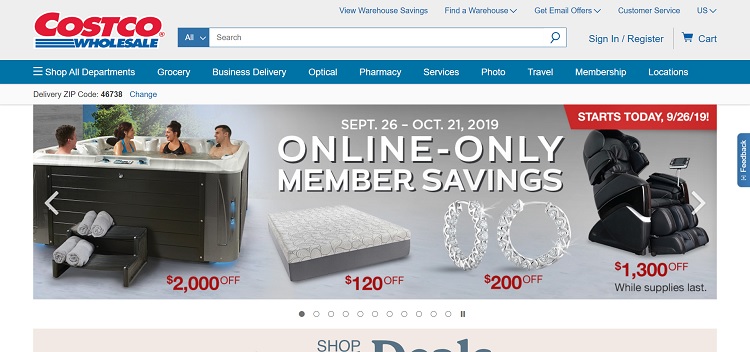
Costco is well-known for its wholesale stores. However, they also have an online presence where they offer things you can’t purchase in-store. They separate offerings by the department, including a section called “Business Delivery,” where businesses can order in bulk and have items delivered.

5. Solidify Your Branding

Reaching people and making your brand a household name is difficult on a local level. Sure, you can attend local trade shows, send out coupons in mailers and advertise in your newspaper, but many people will simply overlook these efforts. 

On the other hand, you can send out highly targeted digital ads, drive people to your online store and convert them into buyers. A website offers the opportunity to post articles on topics related to what you sell. After, share your expertise on social media platforms like Twitter and Facebook. 

6. Market Special Promotions

You likely offer specials from time to time, but it’s difficult to let everyone know about your promotions. With an online store, you can begin to collect emails. When you have a new announcement — BOGO sale going on! — send the ad to everyone at once. 

You can also advertise specials on Facebook or Google, targeting users based on their location. This method, called geolocation, ensures only consumers within a certain radius gets the message. 

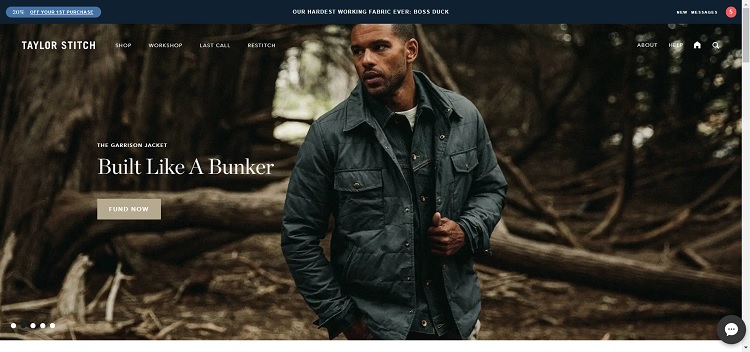
Taylor Stitch offers to clothe online and in brick-and-mortar stores. You’ll find similar items in both. However, one advantage to the online store is expanded sizes and more color choices compared to what you’ll find in the physical location. Once shoppers know their sizes and how things fit, they can go online and place additional orders without the need to visit the store and try pieces on. 

7. Tap into Different Needs

Some people are very tactile. They want to come into a store and touch items before buying. Other people hate getting out in the crowds and would rather shop at home. If something doesn’t fit or they don’t like it, they’ll return it to the store.

An online version of your store taps into the needs of different users and allows you to reach people where they’re most comfortable. 

8. Sell More for Less

The overhead costs of online stores are far less than renting a building, hiring employees to staff a retail location and paying for utilities. Instead, you only have the cost to host and maintain your site, plus employees needed to fulfill the orders. 

When you open an e-commerce store, you create a new outlet for selling goods without spending additional money. The result is more profit for your business.

E-commerce Is a Process

In the beginning, your online store may not pay for itself. However, as it starts to turn a profit, and you become smarter with your marketing efforts, you can invest more time and money into dynamic advertising geared at specific, individual users. 

Your strategic campaigns will become highly-personalized and more successful. With a little effort, you’ll find your e-commerce store is a vital part of your business model. 

About the author

Lexie is a branding enthusiast and web designer. She loves checking out local flea markets and taking her Goldendoodle on hikes. Follow her on Twitter @lexieludesigner and check out her design blog, Design Roast.

Digital BrandingLegal Branding

Five Key Takeaways for Building a Customer Portal in 2019

Andrea Pretorian manages content at BitIRA, where for the past year she’s been leading efforts to get women more involved in crypto and blockchain. When she’s not crusading to empower people with knowledge, she’s likely firing up her camera or learning to play drums. She’s prepared this awesome article below to help you build a better customer experience and scale your business:

Building rapport with prospects is a critical step on the way to conversion, but it’s just important to maintain—if not, develop—relationships with existing customers.

In our world of cryptocurrency IRAs, we have to tackle a healthy dose of lingering skepticism. Alongside the public’s knowledge of the wild west days of early crypto, some reservations may from a thirst for more information surrounding retirement savings and investment options. But the nuances of these specific needs betray the same central problem every business faces: retention, which in turn relies on keeping customers satisfied and engaged.

Earlier this year, we released our My BitIRA portal to give our customers 24/7 access to their accounts. We were strategic about how exactly we went about doing this.

1. Listen to what your audience asks for.

Ask your customers for feedback. This can be a quick online survey you share with your audience or even a brief add-on to a phone call. Offer up a few quick ratings to gauge where you most need to grow, and then end with an open-ended question.

It became clear that our users wanted to be able to check their account information 24-7, as well as flexibly initiate transactions. We knew that these two features were vital to our portal, which we then built to center around them.

2. Know when to say no.

Listening to your customers is extremely important, but this is only true when you also remember that your business is the industry expert. While you should meet your customers’ needs, it is also your job to remain the authority and to serve your customers with best practices. They are paying in part for your expertise, and so it is your responsibility to wield it towards their best interests.

Practically this often means saying no to some requests. It’s a good idea, whenever possible, to shed light on why and to turn this into a learning moment for your public. In fact, a lot of strong brand product and messaging relies on this.

For us, there were some features that wouldn’t have made sense within the portal because they could compromise security or lead to complications. We have to be protective of the process behind transactions in order to make sure that our customers continue to receive the service and security that they expect.

3. Use design to translate your product.

As you dig into the feedback on what your customers want, you will find that specific themes and trends emerge. These should inform not just what you build, but they should also guide how you design and explain it. Great features and applications of your product can go missing if you do not explain them in a way that makes sense.

Our cryptocurrency IRA customers said that they wanted more control over their accounts. We created our portal to grant customers access to their accounts at any time of the day along with the ability to launch transactions and read curated news content. We saw an opportunity to give our customers a level of transparency that translates into more control over their retirement—which is just what they were looking for.

4. Go where the people are.

How is your audience actually engaging with your brand and your products? Knowing as much as you can about the platforms and devices they are using—and even sometimes demographic information including age and geography—can help you optimize their experience. The easier it is for users to engage with you, the more likely they will continue to choose you over the competition.

For us, knowing that 40%—or almost half—of our users were on mobile devices, we knew that we needed to make our portal mobile-friendly. We designed it to be efficient and easy-to-navigate on both desktop and mobile so that all of our users could have the most positive experience possible.

5. Stay true to your values.

As you work to build solutions to meet customer needs, make sure you always stay true to your core brand values. Being very aware of these during the entire design and execution process will keep your voice consistent and your offerings strong.

Security is a top concern and value for us. As we designed this portal, we focused on making sure that we not only built a secure platform but also subjected it to rigorous quality control checks and heavy testing. While we continue to add more functionality to it, it was—and remains—important that our users know, first and foremost, that we are following industry best practices to protect their security.

While the release of this portal has been a critical step forward, we’re always looking to see what new features and strengths we can add to our products. Our customers are on the path of growing their retirement savings with us, but we’re on the path of growing with our customers and our industry.

After all, at the end of the day, it is the commitment to growth and action that sets apart successful brands from the rest of the pack.

Digital BrandingLegal BrandingPersonal Branding

3 Ways to Increase Brand Awareness with Content Marketing

What measures the success of a business? Without a doubt, the number of sales and revenues are pretty clear indicators. However, those are not the only things you should keep track of as a business owner. The way you interact with the masses is often much more critical.

No matter what service or product you offer, it can be rather challenging to encourage your potential clients to buy it if they have no idea who you are. That brings us to another indicator of success – brand awareness.

Let’s face the truth, increasing awareness is not as easy as riding a bike downhill. As a rule, positive changes don’t happen overnight. It is a long-term goal that can be reached through consistent actions and a well thought-through strategy.

Now, let’s look at some common techniques that businesses use to reach this goal:

  • SEO;
  • Advertising;
  • Branded packaging;
  • Effective use of corporate social media accounts.

Each of these techniques can potentially help you in this endeavor. However, some of them may not suit everyone due to high costs or other issues.

Are there any alternatives? Luckily, there is another way to reach the goal. Content marketing is one of the best ways to increase brand awareness and, in this article, we are going to tell you about some of the most effective ways to alert potential customers through delivering high-quality content!

source: https://www.freepik.com/free-photo/content-word-wooden-background_4973634.htm#page=1&query=content&position=14

Content Marketing for Brand Awareness

The key to success is a solid strategy that considers your company’s spirit, the needs of your target audience, and a bunch of other factors. Another vital thing is the quality of the content itself. If it’s not written well, the chances of success will be much lower. Thus, if you have never done anything like that before, you might want to get some help from a professional writing essay service or freelance specialist.

This technique is much different from traditional advertising that focuses on bringing one-time profit. Unlike it, content marketing focuses on what really matters. It delivers relevant, compelling, and value-adding content that establishes your authoritative voice notifies people about you and eventually grows your customer base.

As you can see, content marketing is not much about selling stuff, it is about adding value, and it really works! How to get your content marketing strategy off the ground and succeed? Here are some of the best ways to do this:

Newsletters

For decades, marketers and businesses were using email as a primary channel for advertising and marketing. Today, despite the broad availability of alternative channels, email still remains widely used.

Email newsletters are great for keeping your customers engaged and increasing brand awareness. Such newsletters can share news, give valuable tips, deliver new and relevant information, and even offer free services/products.

Here are a few tips to help you get started:

  • Make sure it is valuable, relevant, and engaging;
  • Create an eye-catching topic to make the customers want to open your letter and read it;
  • Include contact details and links;
  • Engage potential clients in friendly, personable, and encouraging conversation.

If you follow these tips, you will create excellent newsletters that will help to keep your company at the forefront of customer’s minds, so be sure to try this method!

Blog

Running a company’s blog is another effective way to empower your content marketing strategy and increase brand awareness.

As a matter of fact, having a corporate blog can give you plenty of benefits if you approach it wisely. Thus, if you still don’t have one, be sure to change this as soon as possible!

Have no clue where to start? Here are a few ideas on how to build your brand through the corporate blog:

  • Choose topics that are interesting and relevant to your audience;
  • Make sure that each article brings real value;
  • Don’t hesitate to adopt some SEO techniques to make your articles more visible on the Web, but don’t get too hard on it;
  • Deliver unique content.

These tips should help you create an excellent blog that grows customers’ awareness and trust. Also, be sure to check out what your competitors deliver to their clients. This can help you get on the right track and grasp the general idea of what works well.

Social Media

Finally, building a brand is possible with various social media channels. Today, platforms like Facebook, Instagram, and Twitter have already become viral tools for marketing, advertising, interaction with the audience, and other goals.

source: https://www.freepik.com/premium-photo/new-idea-creative-concept-business-woman-hand-holding-light-bulb_2752038.htm#page=1&query=brand%20awareness&position=13

Wrapping Up

Businesses have discovered the benefits of social media and use them to accomplish their ultimate goals. It is another effective way to grow brand awareness with the help of high-quality content, so be sure to try it!